Wologai Traditional Village is one of the most extraordinary heritage sites in Ende Regency, Flores, East Nusa Tenggara. Perched at approximately 1,045 metres above sea level along the Trans-Flores Road in Detusoko District, this ancient settlement is believed to be around 800 years old and remains one of the best-preserved examples of traditional Lio culture in all of Indonesia.
Moreover, Wologai is not a museum piece. People still live here, observe their ancestral rituals, and maintain the architectural traditions of their forebears. The conical-roofed tribal houses, the sacred courtyard where ceremonies take place, and the pine tree that marks the village boundary all carry deep spiritual and cultural meaning for the Lio community.
This guide covers everything you need to plan a visit to Wologai Traditional Village — from how to get there and what to see, to the village’s two major annual rituals and what to buy as a souvenir.
Quick Facts: Wologai Traditional Village
Location: Trans-Flores Road, Detusoko District, Ende Regency, East Nusa Tenggara (NTT)
Distance from Ende: Approximately 37 km east of Ende city
Altitude: Approximately 1,045 metres above sea level
Village age: Approximately 800 years (verify before publishing — see Editor Note above)
Entry fee: IDR 10,000/person
Number of buildings: 18 (including 5 tribal houses and 1 large ceremonial house)
Major rituals: Keti Uta (April) and Ta’u Nggua (September)
Photography: Permission from residents is required before photographing traditional houses
About Wologai Traditional Village
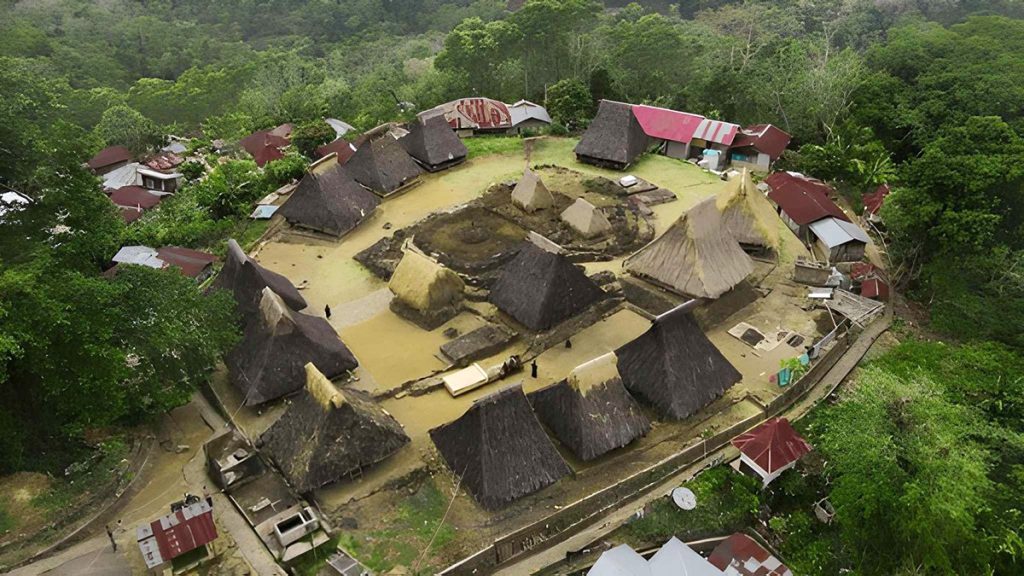
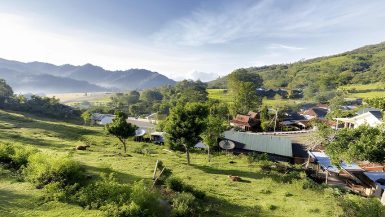
Wologai Traditional Village sits along the Trans-Flores Road in Detusoko District, approximately 37 kilometres east of Ende city. The village occupies a hilltop position at around 1,045 metres above sea level, giving it a commanding view over the surrounding landscape of hills, forests, and rice paddies.
Furthermore, the village is home to the Lio people, an indigenous ethnic group of Flores whose traditions, rituals, and architectural practices have survived for centuries with remarkable continuity. The houses in Wologai are not reconstructions — they are living structures maintained according to ancestral methods, occupied by community members, and used as active spaces for ceremony and daily life.
In addition, a distinctive pine tree at the village boundary serves as a landmark with legendary significance. According to local oral tradition, the ancestors of the Lio community planted this tree when they first established the settlement. As a result, the tree marks both the physical and spiritual entrance to Wologai.
Visitors must sign the guest book upon entering the village. This is a gesture of respect toward the community and a simple but meaningful acknowledgement that you are entering a living cultural site, not a tourist attraction.
How to Get to Wologai Traditional Village
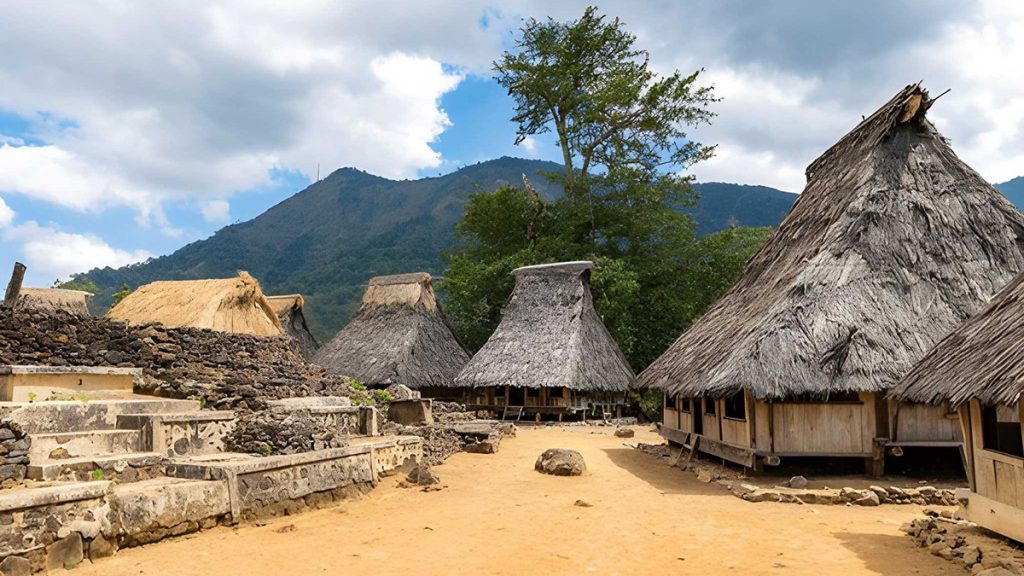
Wologai Traditional Village is accessible from Ende, the main city of Ende Regency. The journey is straightforward, and the route passes through beautiful highland countryside.
Step 1: Fly to Ende
H. Hasan Aroeboesman Airport in Ende receives regular flights from Bali and other Indonesian cities, typically via Kupang or Labuan Bajo. From the airport, you can reach central Ende by taxi or public transport in a short drive.
Step 2: Drive from Ende to Wologai (approximately 37 km)
From central Ende, the drive to Wologai Traditional Village takes approximately one hour along the Trans-Flores Road heading east. Transport options include:
- Rental car with driver: The most comfortable option, costing approximately IDR 300,000 per day. A driver familiar with the route is useful as road signage in rural Ende Regency can be limited.
- Public bus or bemo: Budget-friendly but slower. Ask the driver to stop near the Detusoko District on the Trans-Flores Road.
- Rental motorcycle: Suitable for experienced riders. The winding highland road requires care but rewards with excellent scenery.
Furthermore, the road to Wologai passes through hilly terrain with winding sections. The drive itself is scenic and enjoyable. Upon approaching the village, you will see traditional-style houses converging on the hilltop — a distinctive sight that signals your arrival.
What to See at Wologai Traditional Village
The Traditional Houses
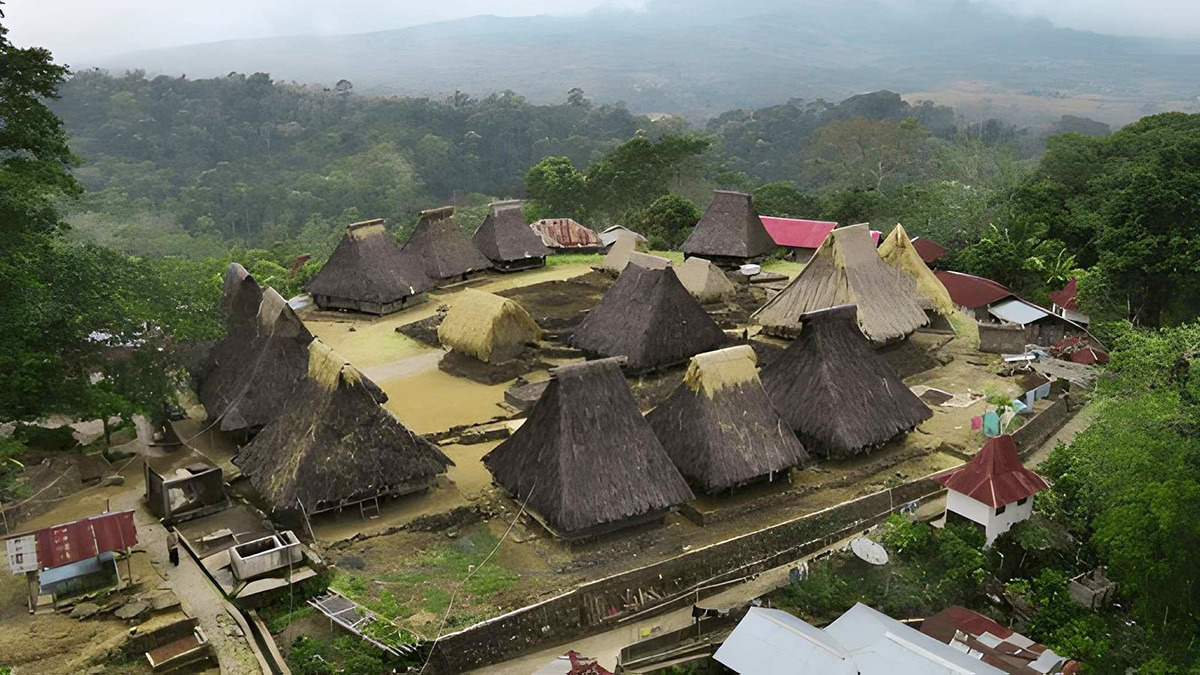
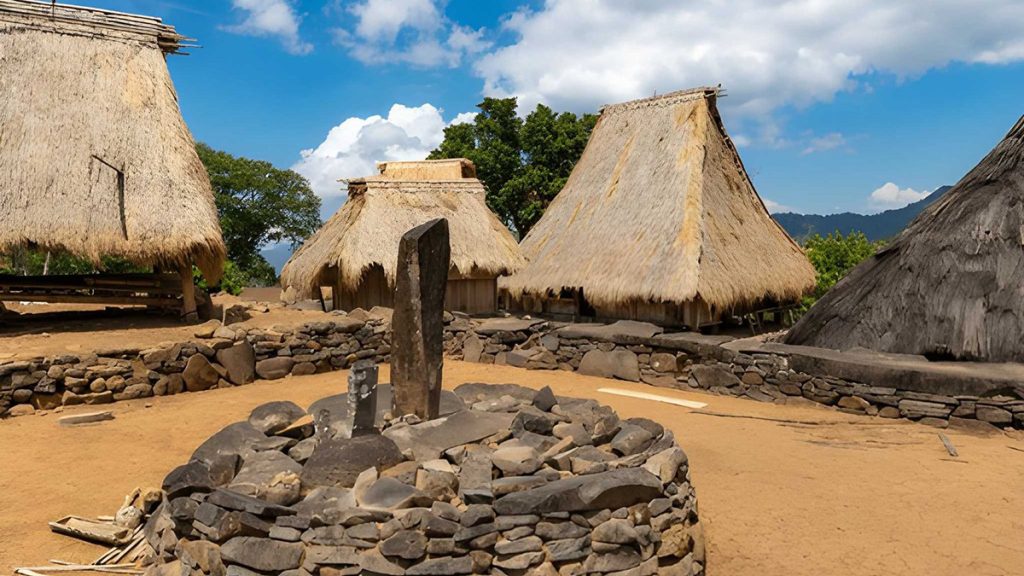
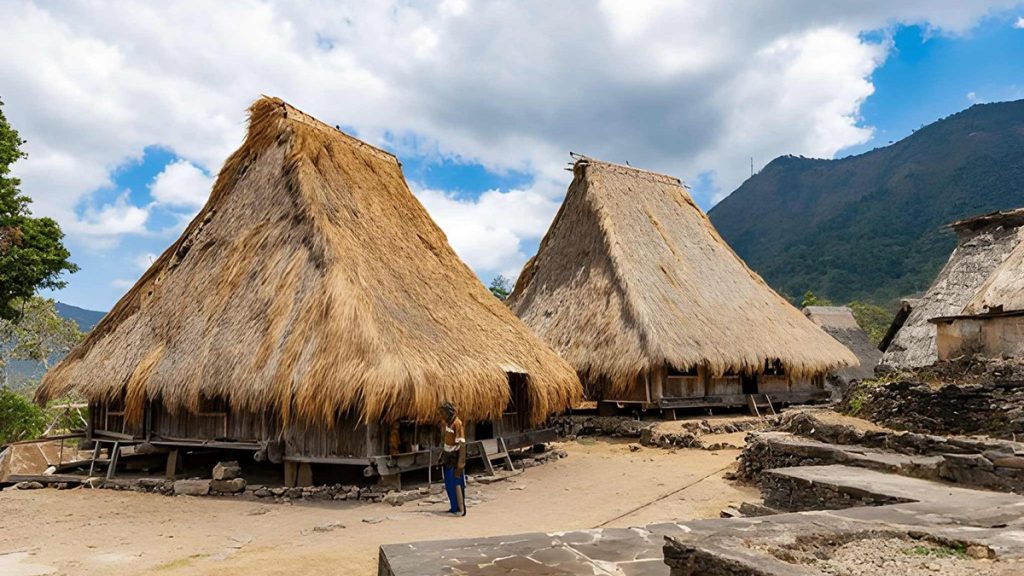
Wologai contains 18 buildings in total, including five tribal houses and one large ceremonial house. The tribal houses sit within the outer ring of the sacred courtyard, known as Tubu Kanga, and serve as residences for community members. Each tribal house belongs to a different clan and has its own name — among them Saopanggo, Attawolo, Saolabo, Lewabewa, and Analamba.
Furthermore, each house uses its tribal house to store ancestral heirlooms and sacred relics. The large ceremonial house is reserved exclusively for use during traditional rituals. In addition, each house features carvings on its wooden poles that are unique to its clan, providing a visual record of each family’s identity and lineage.
The Architecture
The structural design of Wologai’s traditional houses reflects centuries of accumulated knowledge about building in highland Flores conditions. Each house rests on 16 wooden stilts, with 16 flat stones arranged upright as the foundational pillars. The typical house measures approximately 7 metres long and 5 metres wide, with a wall height of around 4 metres and a conical roof of approximately 3 metres.
Moreover, the conical roof shape carries deep symbolic meaning. It represents the hierarchical structure of Lio society, with the peak of the cone symbolising the authority of traditional leaders and elders over ordinary community members. In the past, roofs were thatched with reeds. Today, palm fibre has replaced reeds as the preferred roofing material while preserving the traditional form.
The space beneath the house — known as Lewu — was historically used to shelter livestock such as pigs and chickens. The middle level serves as the main living area, while the attic stores ritual items and sacred objects.
Tubu Kanga: The Sacred Courtyard
The central feature of Wologai Village is Tubu Kanga — the highest courtyard within the settlement. This open space is surrounded by the stilt houses of the community and serves as the venue for traditional ceremonies and rituals. It functions as an altar space where offerings are placed for the ancestors and the creator. Furthermore, the Gawi communal dance, performed during major ritual events, takes place here.
The Boundary Pine Tree
One of the most distinctive features of Wologai is the pine tree at the village entrance, approximately 50 metres from the main cluster of houses. According to local oral tradition, the village’s founding ancestors planted this tree to mark the sacred boundary of the settlement. Today, it serves as both a landmark and a reminder of the community’s deep connection to its ancestral history.
Culture, Rituals, and Traditions at Wologai Village
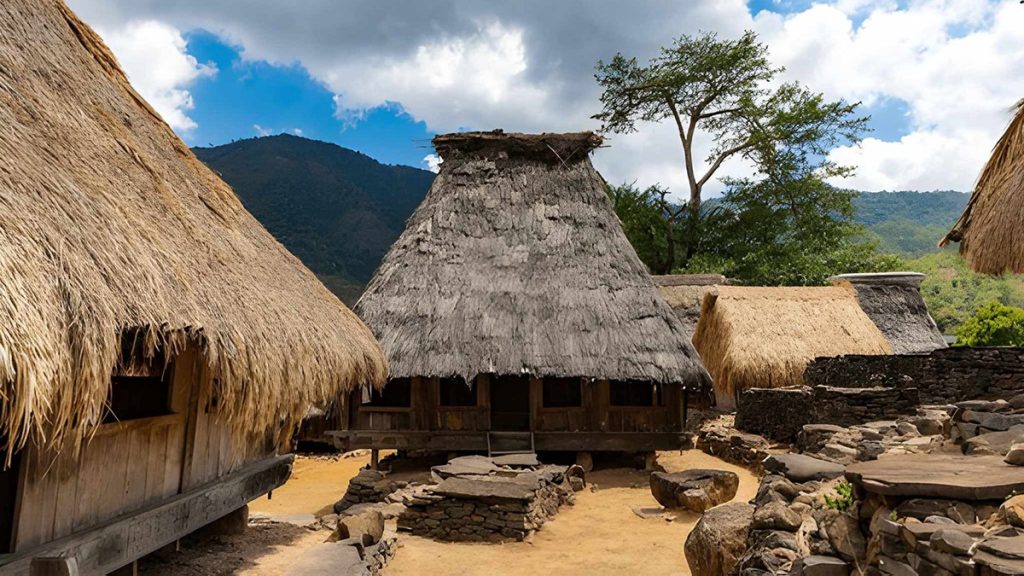
The Two Major Annual Rituals
Wologai Traditional Village observes two central annual rituals that structure the community’s cultural calendar:
- Keti Uta (Rice, Corn, and Bean Harvest Ritual): Held in April, this ceremony marks the harvest of the three main crops grown by the community. It is a time of celebration, gratitude, and communal gathering.
- Ta’u Nggua (Rice Mashing Ritual): Held in September, this ritual reaches its peak during a period called Pire — seven continuous days during which all normal daily activities stop. Farming, harvesting palm wine, and other work cease entirely. The Pire period is often compared to the Nyepi silence ceremony of Bali in its scope and spiritual intensity.
Furthermore, both rituals conclude with the Gawi, a communal dance performed in the Tubu Kanga courtyard that expresses joy, unity, and gratitude. The Gawi is one of the most visually striking expressions of Lio cultural life and is deeply memorable for visitors who time their trip to coincide with it.
The Naka Wisu House Construction Ritual
When a new traditional house is built in Wologai, the community observes the Naka Wisu ritual. This ceremony governs the process of cutting trees in the forest for use as house pillars. At noon on the day of the ritual, a chicken is slaughtered to begin the ceremony. The Naka Wisu reflects the belief that the natural materials used in construction must be taken with respect and spiritual permission from the forest.
Photography Etiquette
Visitors are welcome to photograph the village and its buildings. However, permission from residents must be sought before photographing traditional houses at close range or photographing community members. This is a matter of basic respect for a living cultural site. Your guide or the guest book attendant can advise you on the appropriate way to ask.
Wologai Coffee, Food, and Souvenirs
Wologai Specialty Coffee
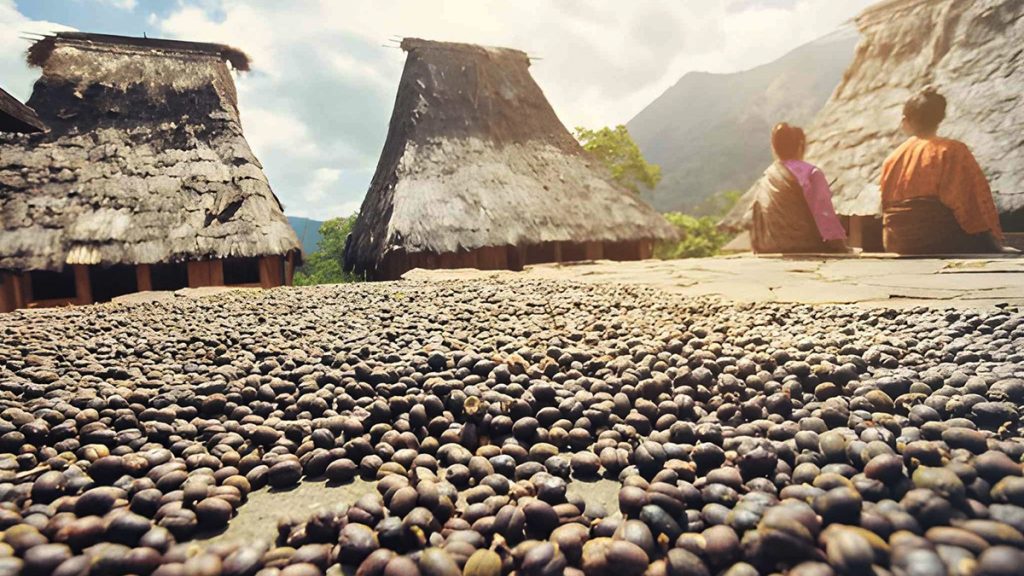
One of the most distinctive products of the Wologai area is its locally grown coffee. The highland volcanic soil and cooler temperatures of the 1,045-metre altitude produce a Robusta coffee with a rich, distinctive character. Visitors are encouraged to try a cup of traditional Wologai coffee during their visit. Furthermore, coffee beans and roasted coffee can be purchased to take home as a souvenir of the region.
Walnuts and Local Produce
In addition to coffee, local residents process walnuts grown in the surrounding area. Packaged walnuts are available for purchase and make a practical and authentic souvenir. Other locally produced foods are also available from community members.
Traditional Crafts and Souvenirs
Wologai artisans produce two distinctive handmade souvenirs that are unique to the village. Small wooden carved dolls, crafted from locally sourced timber, are a popular choice. Furthermore, Bbu woven textiles — the traditional woven fabric of the Wologai community — are available and represent one of the most meaningful cultural souvenirs available anywhere in the Ende region.
Entry Fee and Practical Information
Wologai Traditional Village: Entry and Costs
Entry fee: IDR 10,000/person (paid upon signing the guest book)
Rental car from Ende: Approximately IDR 300,000/day
Distance from Ende: Approximately 37 km east along Trans-Flores Road
Travel time from Ende: Approximately 1 hour by car
Prices are approximate and subject to change. Confirm current rates locally before visiting.
Furthermore, hiring a local guide from Ende or through your accommodation is recommended. A guide adds cultural context throughout the visit, assists with appropriate etiquette in the village, and can translate between visitors and community members where needed.
Best Time to Visit Wologai Traditional Village
Year-Round Destination
Wologai Traditional Village is open to visitors throughout the year. The highland altitude keeps the climate cool and pleasant relative to the coastal areas of Ende Regency. As a result, the village is comfortable to explore in all seasons.
Best for Rituals: April (Keti Uta) and September (Ta’u Nggua)
Visiting during either of the two major ritual months gives travelers the extraordinary opportunity to witness living Lio cultural traditions in their full ceremonial form. The Ta’u Nggua festival in September is particularly significant, with the seven-day Pire silence period followed by the communal Gawi dance in the Tubu Kanga courtyard. Contact the village or your tour operator in advance to confirm exact dates for the current year.
Dry Season: April to October
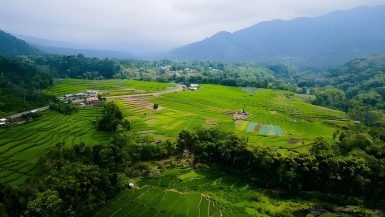
The dry season offers better road conditions and more reliable weather for the drive from Ende. Furthermore, the surrounding landscape of rice paddies and forested hills is particularly beautiful during this period. In addition, clear skies enhance the views from the hilltop village location.
Travel Tips for Wologai Traditional Village
- Sign the guest book at the entrance before entering the village. This is both a requirement and a mark of respect.
- Ask permission before photographing traditional houses or community members. Do not photograph without consent.
- Dress modestly when visiting. Wologai is an active cultural and spiritual site — appropriate clothing shows respect for the community.
- Hire a local guide. Cultural context significantly enriches the experience and helps ensure you interact appropriately with the community.
- Try the local Wologai coffee. It is a genuine product of this highland environment and a worthwhile experience in itself.
- Buy souvenirs directly from village artisans. This ensures your spending benefits the community members who make the products.
- Check with your accommodation or a local guide about the current ritual calendar if you want to time your visit to coincide with Keti Uta or Ta’u Nggua.
Ready to Visit Wologai Traditional Village?
Wologai Traditional Village is one of the most genuinely authentic cultural experiences available in eastern Indonesia. The ancient architecture, the living ritual traditions, the sacred courtyard, the legendary pine tree, and the warmth of the Lio community combine to create a visit that feels meaningful rather than merely scenic.
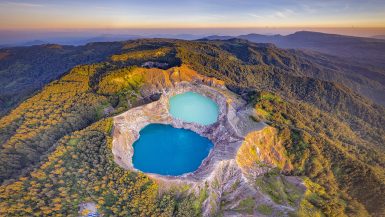
Moreover, its location on the Trans-Flores Road makes it easy to combine with other Ende region destinations, including Kelimutu National Park, Moni Village, and West Detusoko Village. For more information on exploring the Ende region, visit the official Indonesia Tourism guide to Ende.
FAQs
According to local accounts, Wologai Traditional Village is approximately 800 years old, making it one of the oldest continuously inhabited traditional settlements in Flores.
Visitors pay approximately IDR 10,000 per person upon signing the guest book at the village entrance. This fee is collected by the village community and contributes directly to the maintenance of the site. Additional costs include transport from Ende (approximately IDR 300,000 per day for a rental car) and any guide fees.
Yes, if you time your visit correctly. The two major annual rituals are Keti Uta in April and Ta’u Nggua in September. The Ta’u Nggua festival is particularly significant, with a seven-day silence period followed by the communal Gawi dance in the Tubu Kanga courtyard. Contact your tour operator or local accommodation in Ende to confirm the exact dates for the current year.
Photography of the village landscape and general surroundings is generally acceptable. However, photographing traditional houses at close range or community members requires explicit permission from the residents. Always ask before raising your camera. Your guide or the guest book attendant can help you navigate this appropriately. Respecting this boundary is an important part of being a considerate visitor to a living cultural site.
Wologai is ideally combined with other Ende region destinations as part of a multi-day itinerary. Nearby highlights include Kelimutu National Park and the tri-coloured crater lakes (accessible via Moni Village), West Detusoko Village for ecotourism and highland coffee, Wolotopo Traditional Village for additional cultural exploration, and the Bung Karno Contemplation Park in Ende city. All of these destinations are within a reasonable driving distance along the Trans-Flores Road.